Works with any harness your team already uses














The right model for each job, through one proxy, on one bill
 Illustrative example
 Illustrative example
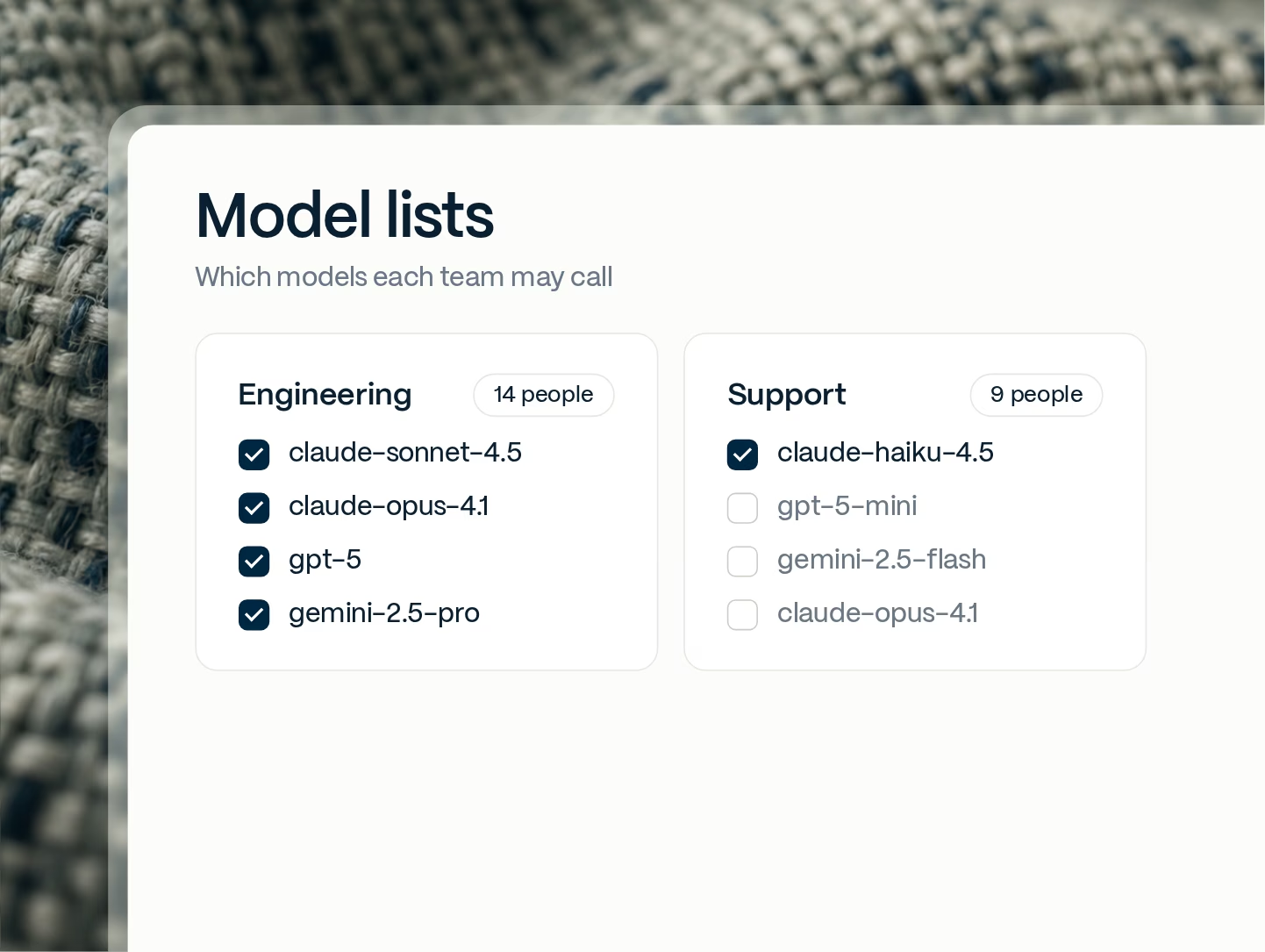 Illustrative example
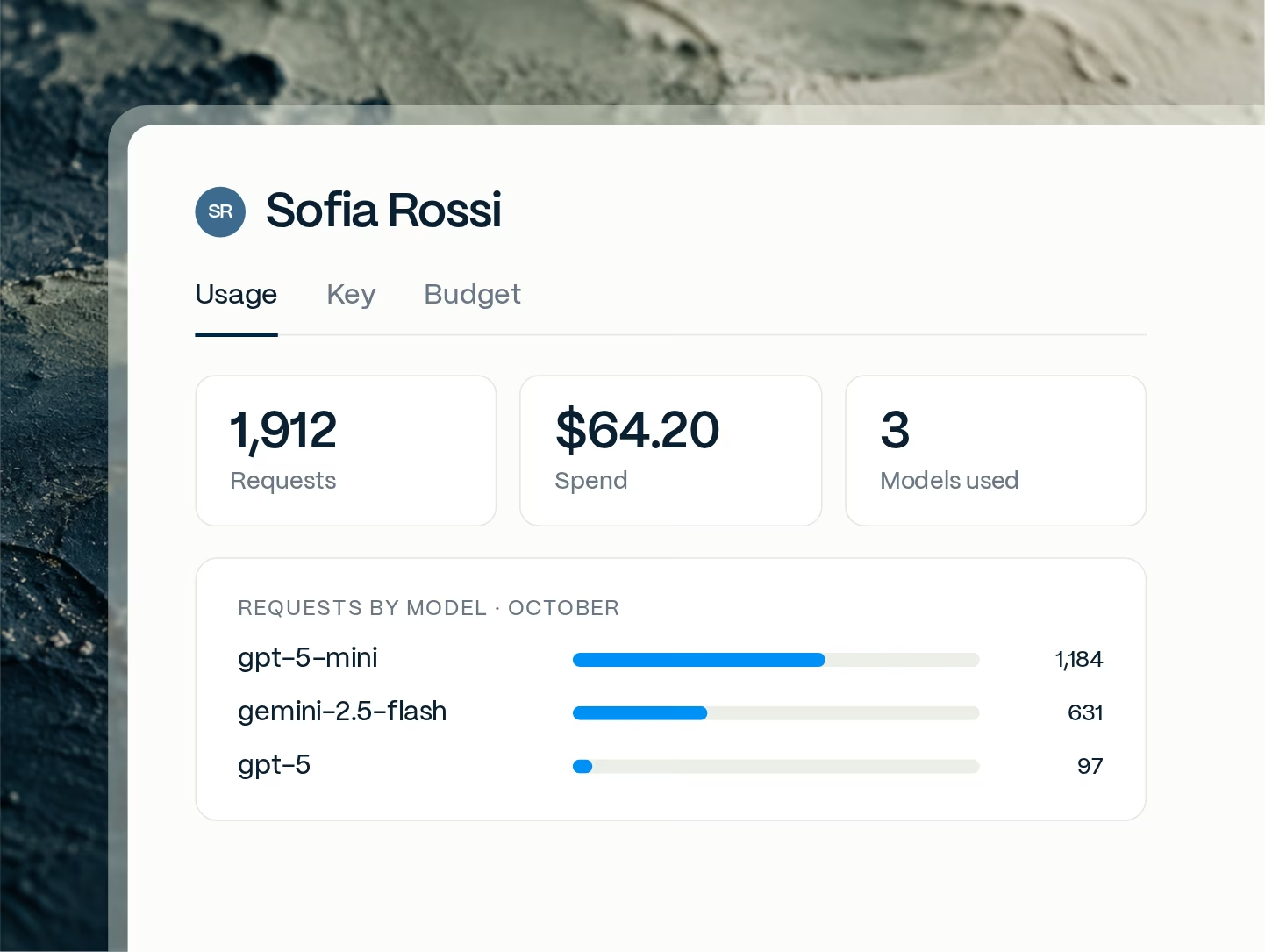 Illustrative example
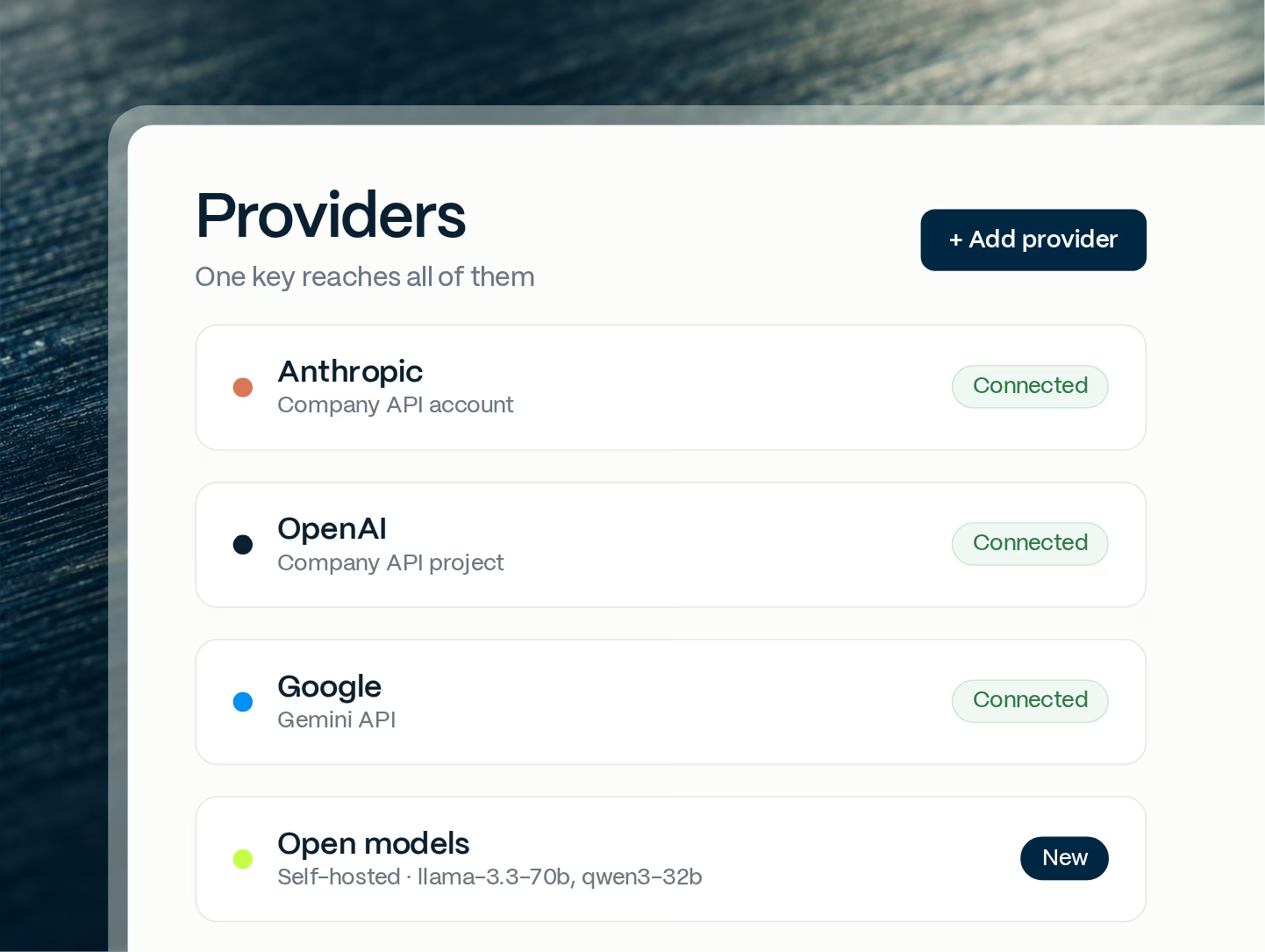 Illustrative example
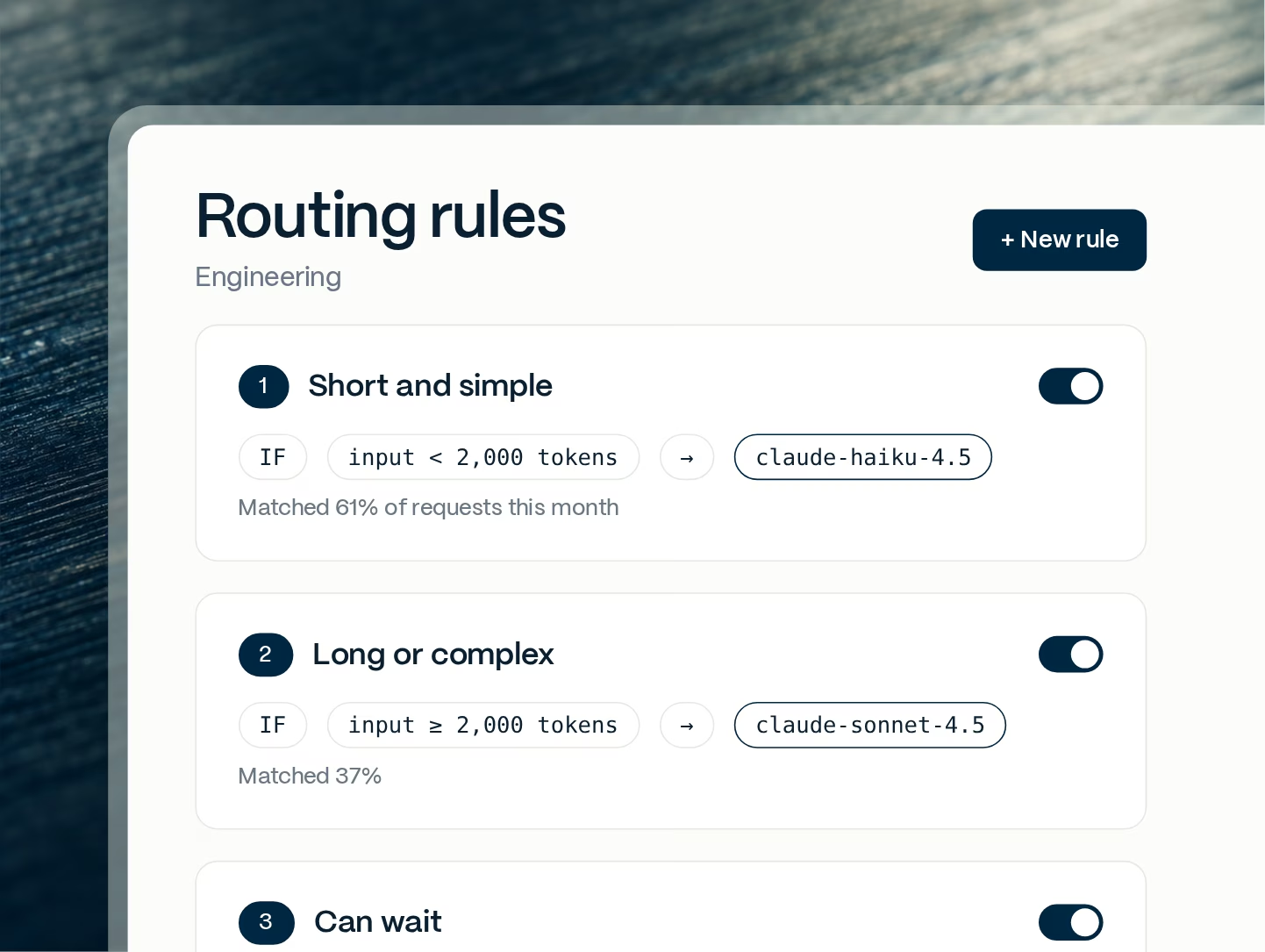 Illustrative example

People
The people who tune it with you
The proxy is built with you, not bought from a pricing page. We go through how your company uses AI today, which tools and agents each team runs, and which answers have to stay top quality. Then we write the routing rules, test them on your own work, and keep retuning as new models ship and prices change. These are roles, not named people.

Takes the first call and goes through one month of your usage: which tools, teams and models cost what, where the waste is, and the saving to expect. Your point of contact from the first call onward.

Reviews your spend by model and task, then writes the rules that trim context, send easy work to cheaper models, cache repeated context and queue jobs that can wait for batch pricing.

Tests every rule on your own work before it goes live and compares the answers with what you get today. Keeps up with what each model does well and what it costs.

Prepares the monthly view of spend and savings by person, team, tool and model, and flags the patterns that point at the next saving.

Sits with your engineers, learns your tools, agents and workloads, then builds the proxy around them: what to trim, what to cache, which model takes which task. Stays on it until the saving is real.

Looks at the accounts and seats you already pay for, works out the mix that costs least for how your team works, and makes sure everything stays in your company's name so you can leave at any time.

Configures retention per client: metadata only by default, prompt bodies only if you switch it on, and deletion schedules that match your own policies.
Why Proxen
Many models, one address, under rules you approve
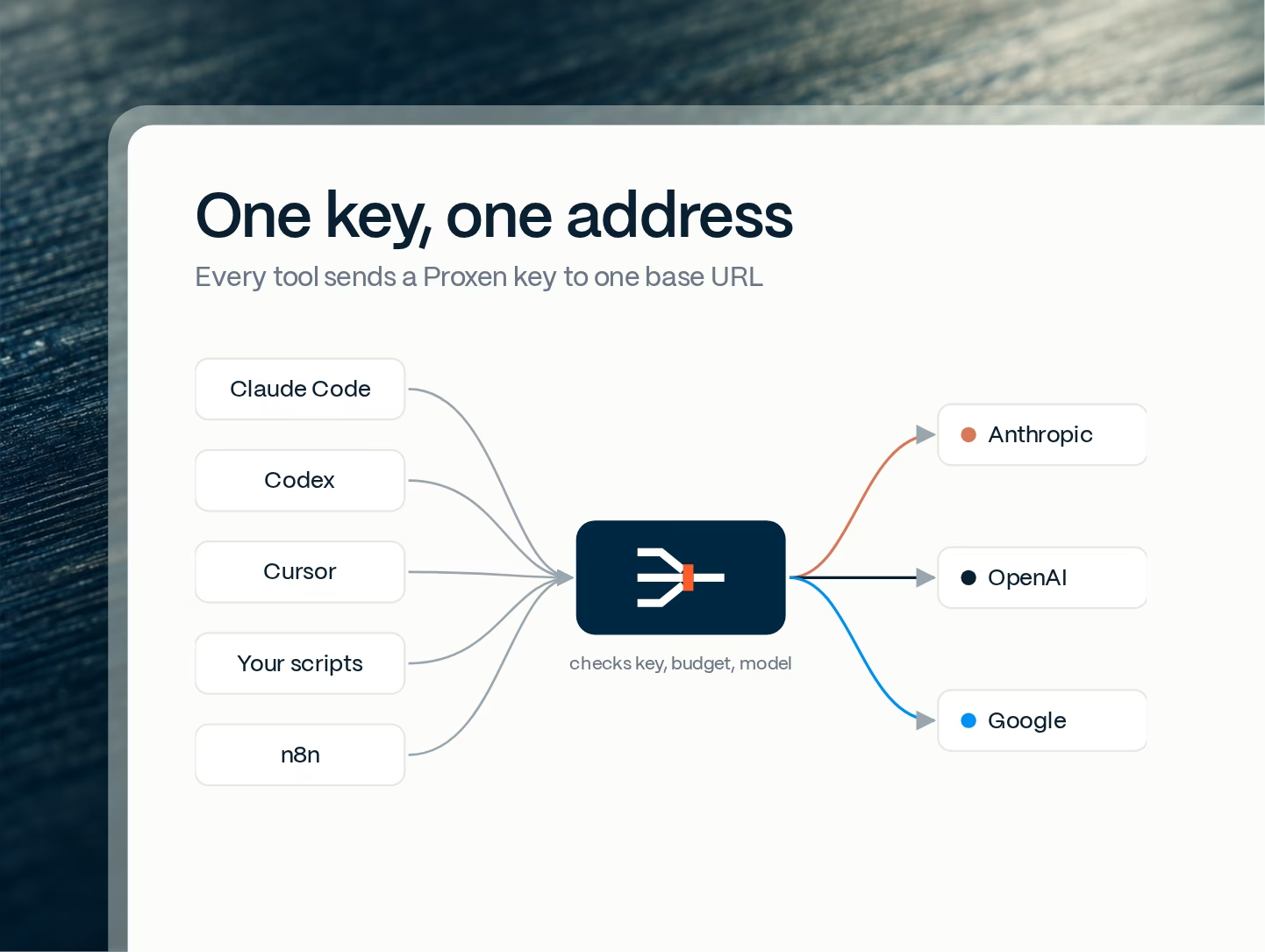
One address and one key per person and per agent means you can use the cheapest model that does each job, try a new model the day it ships, and see every request in one place, without opening another account or learning another tool.
Switch models without switching tools
The model name is a parameter in the request, not a different login. A team can try a new model the day it ships, as long as it is on their list. No new account, no new invoice, no new procurement cycle for every provider.
Your accounts, not ours
Proxen forwards requests on your company's own Anthropic, OpenAI and Google accounts. Provider keys stay server-side and nobody in the company sees them. If you leave, your accounts and your history stay with you.
Prices vary 40x inside one family
On Anthropic's price list, Claude Opus 5.5 costs $4 per million input tokens and Claude Haiku 5.5 costs $0.10 for prompts up to 100,000 tokens: forty times less (October 2026). Sending easy work to the smaller model is one of the biggest levers on price per token, and it costs engineers nothing in workflow.
Every call logged the same way
Claude, GPT, Gemini or an open model, the log line looks the same: who, which model, tokens in and out, cost, time. That makes spend comparable across providers and lets finance charge back one ledger instead of reconciling three invoices. Prompt bodies are not stored unless you turn that on.
Price gap per token, Claude Opus 5.5 vs Haiku 5.5, prompts up to 100k tokens (Anthropic pricing, Oct 2026)
Price gap per token, Claude Opus 5.5 vs Sonnet 5.5 (Anthropic pricing, Oct 2026)
Off input and output on batch work (Anthropic and OpenAI pricing pages)

An example setup
Three providers, one proxy, one team at a time
An example starting point: engineering on raw Anthropic keys with every request on the top model, a data team on OpenAI, a pilot on Gemini, and three invoices nobody can split by team.
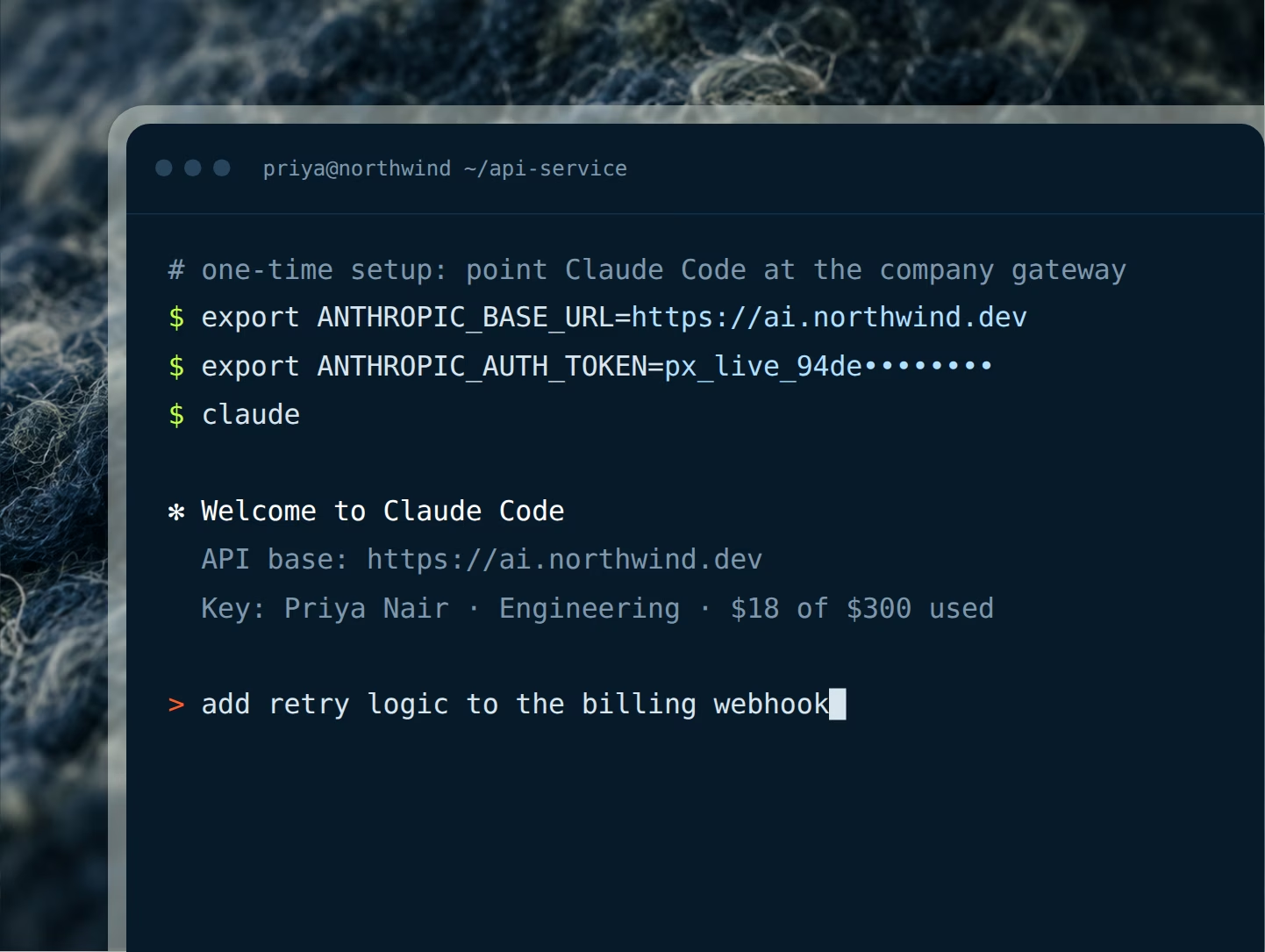
We connect the company's own accounts for all three behind one proxy, write a model list and routing rules per team, and test them on each team's own work. Tools are repointed with one setting. From then on each task goes to the cheapest model that does it well, and every request has a name and a budget.

What we set up
- Company accounts for Anthropic, OpenAI and Google
- Routing rules per team, tested on your own work
- Caching and batch for the heaviest workloads
- One key per person and per agent with a monthly budget
- One base URL change in every tool the team uses


The right model for every task, through one proxy
Find out how much of your bill is the wrong model
Send us one month of usage. We show you which requests could go to a cheaper model without hurting the answer, and what that is worth. Free.