engineering
Lower your coding-agent bill by up to 70-80%, same output
Claude Code, Codex and Cursor are billed per token, and long agent sessions get expensive fast. We sit with your engineers, learn how they work, and build a proxy that trims what each request carries, picks the right model per task and keeps the cache warm. Same tools, same workflow, same quality. Your number depends on your workload; the free bill review tells you before you commit.
Works with any harness your team already uses















How it helps
Where coding-agent money goes, and how the proxy cuts it
Anthropic puts the average Claude Code cost at $150 to $250 per developer per month across enterprise deployments. Most of it is context: the agent resends the conversation, tool output and files on every turn. That is where the proxy works. Your tools do not change. Only the address they point at does.
Shorter context, warmer cache
Long sessions resend everything on every turn. The proxy trims history and context to what the model needs and sets sensible answer limits. It keeps the cache warm too: on Opus 5.5 and Sonnet 5.5 a cache read costs 5 percent of the input price, so every avoidable cache rebuild is money lost.
Why it matters: context, not answers, is most of a coding-agent bill. Cutting it saves money on every single request.
The right model for each step
Renames, commit messages, test scaffolds and quick lookups do not need the strongest model. Inside one agent session the proxy picks a cheaper or stronger model for each step. On Anthropic's price list Sonnet 5.5 is half the price of Opus 5.5, and Haiku 5.5 is one fortieth on prompts up to 100k tokens. Anthropic's own docs say Sonnet handles most coding tasks well.
Why it matters: the hard architectural work keeps the top model, and the rest stops paying top prices. We test every rule on your own repos first.
CI jobs and bulk work on batch pricing
Not every request needs an answer in two seconds. Nightly test generation, code review bots, doc builds and large refactors can wait. Work like that goes through the providers’ batch APIs, which Anthropic and OpenAI price at half the normal rate on input and output. We move the right jobs over with you. Interactive work stays on the fast path.
Why it matters: CI and bots are often the easiest saving: nobody is waiting on them, so half price costs nothing in workflow. The log shows what ran where.
Rolling out across the whole company?
See how the proxy is rolled out team by team, with a pilot first

Same tools.
A smaller bill.
Engineers will not give up tools that make them faster, and they should not have to. Any harness plugs into the proxy with one base URL change: Claude Code, Codex, Cursor, Cline, Aider, the SDKs and the agents you built yourselves. Every request runs on API accounts your company owns, each developer and agent gets a key with a budget, and the bill drops underneath without anyone changing how they work.

Address for every coding tool: Claude Code, Codex, Cursor, SDKs and your own agents
Off input and output on batch work like CI and review bots (Anthropic and OpenAI pricing)
Price gap per token, Claude Opus 5.5 vs Haiku 5.5, prompts up to 100k tokens (Anthropic pricing, Oct 2026)

Built for the way engineering teams actually run coding agents. Tuned around your repos.
Every rule below is set with you and approved by you: what to trim, which model takes which task, what to cache, what can wait for batch, how much each project or agent may spend. Quality is tested on your own work before anything changes.
Market challenges
Long agent sessions resend the whole conversation, tool output and files on every turn, so the bill grows with every step.
The proxy trims history and context to what the model needs and sets sensible answer limits. Fewer tokens in and out on every request, same result.
Nobody can tell whether a request came from the production repo, a side project or an experiment, so the bill cannot be explained.
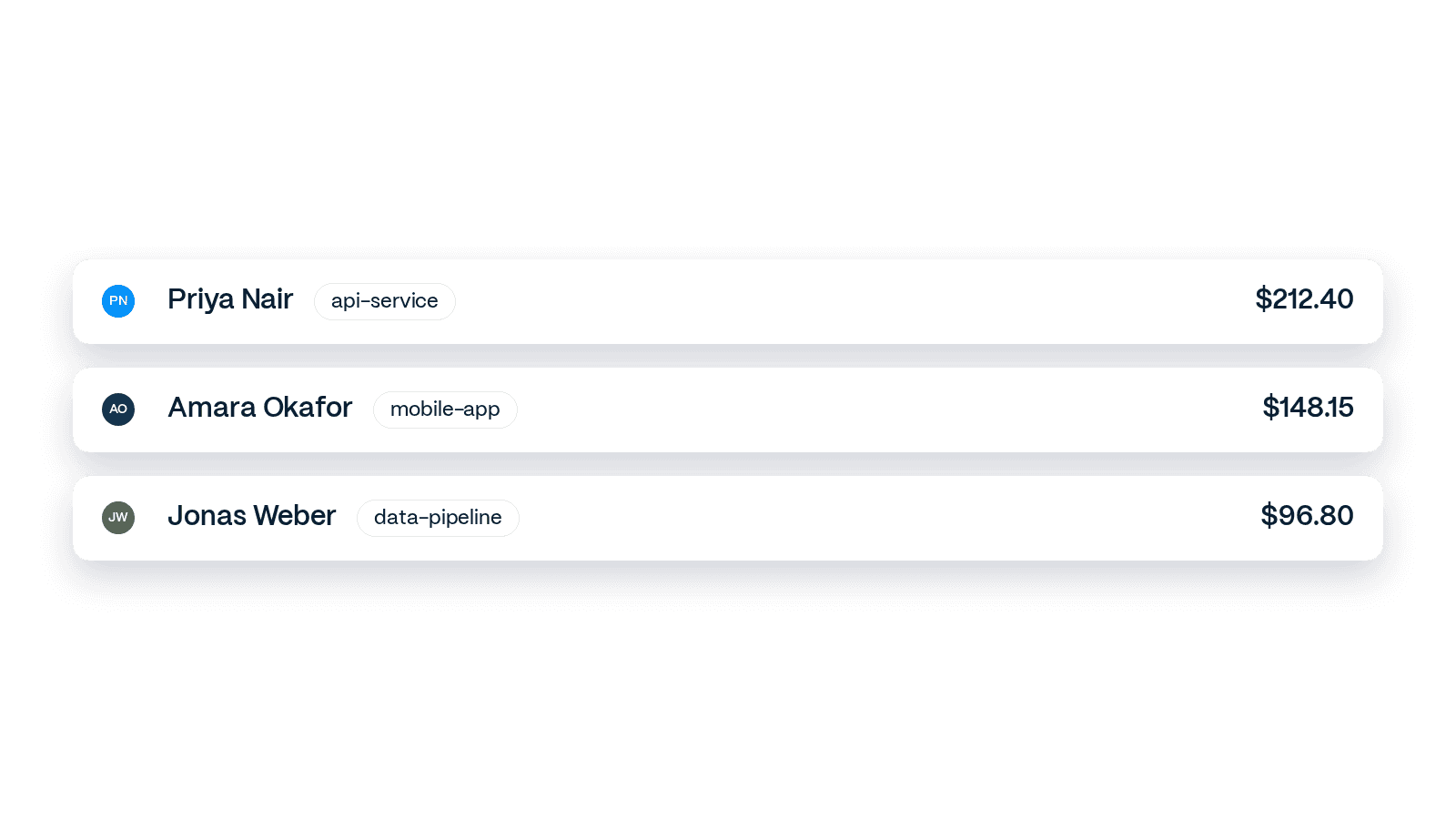
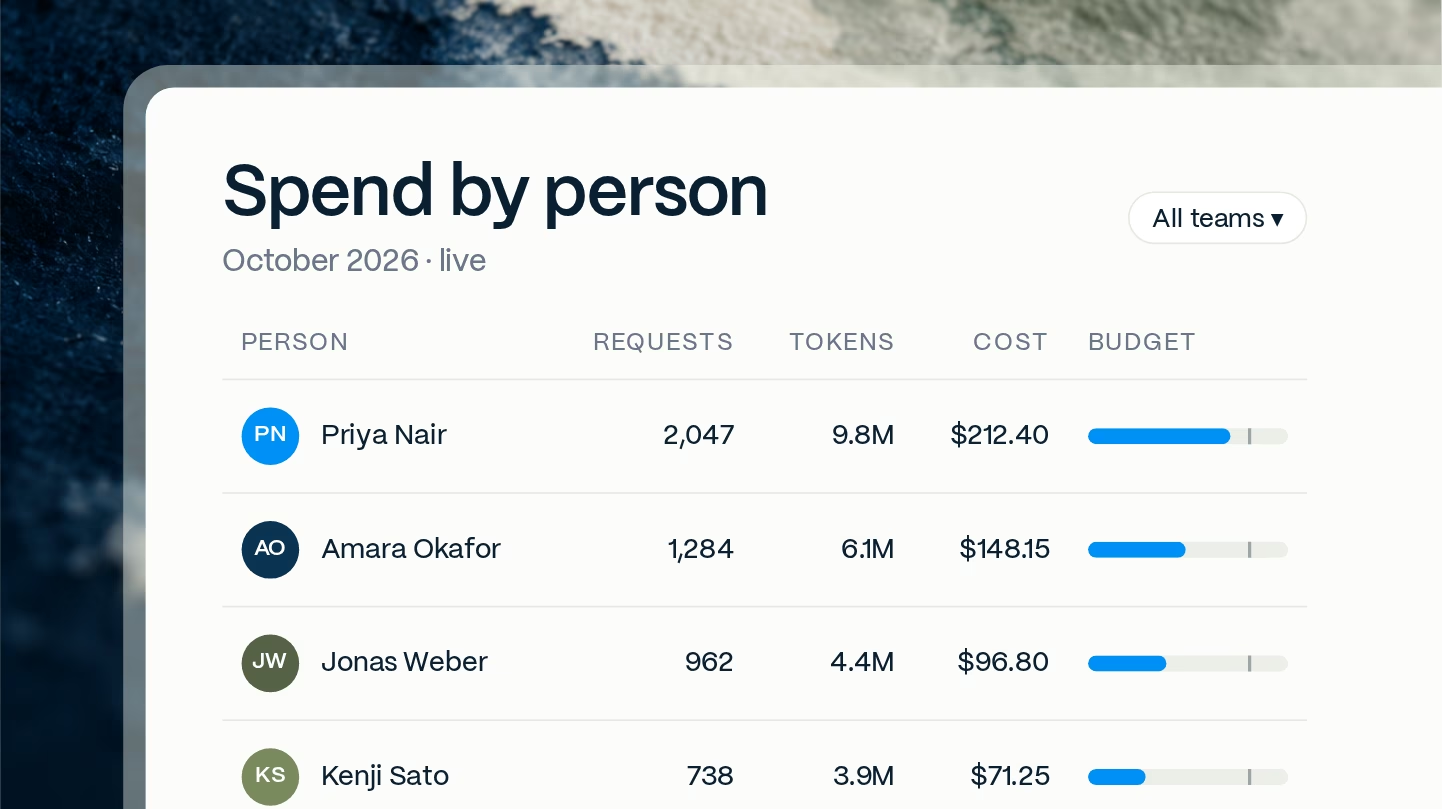
Keys are tagged by repo, project and team. Every request is logged against that tag, so project spend is a filter in the console, not a guess at month end.
The same system prompts, tool definitions and files are paid for again and again, and small changes quietly break the cache.
Our own cache answers repeated requests, and we make full use of the providers' prompt caching, where a cache read on Opus 5.5 or Sonnet 5.5 costs 5 percent of the input price. We fix what breaks it.
One developer leaves an agent loop running over a weekend and a month of budget is gone before anyone looks.
Each developer and each agent gets its own key with its own monthly budget and a hard stop. Spend by one key never touches anyone else's allowance, and the console shows exactly who used what.
CI pipelines, review bots and nightly jobs run at full interactive prices because there is no way to tell the plan that they can wait.
Give CI its own keys, and send the work that can wait through the providers' batch APIs at half price. We move the right jobs over with you. Developers keep the fast path.
Every team picks a frontier model for everything, including tasks a small model handles fine, and the bill shows it.
The proxy picks the cheapest model that does each task well, even inside one agent session, and keeps the strongest model for hard work. Every rule is tested on your own repos, and the log shows which model answered.
A company-wide rollout sounds like a quarter of re-tooling, new CLIs and retraining hundreds of developers.
Change one base URL in Claude Code, Codex, Cursor or your SDK and paste in the new key. Claude Code officially supports an organization's gateway. The workflow stays as it is.
why it works for coding agents
Seats were easy to budget. Metered agents are not, unless someone tunes them.
A seat has a fixed price. A metered agent does not: its cost depends on how much context it carries, which model answers and how often the cache misses. A proxy tuned to your repos cuts all three, and a key per person and per agent shows you the result by developer, project and tool.
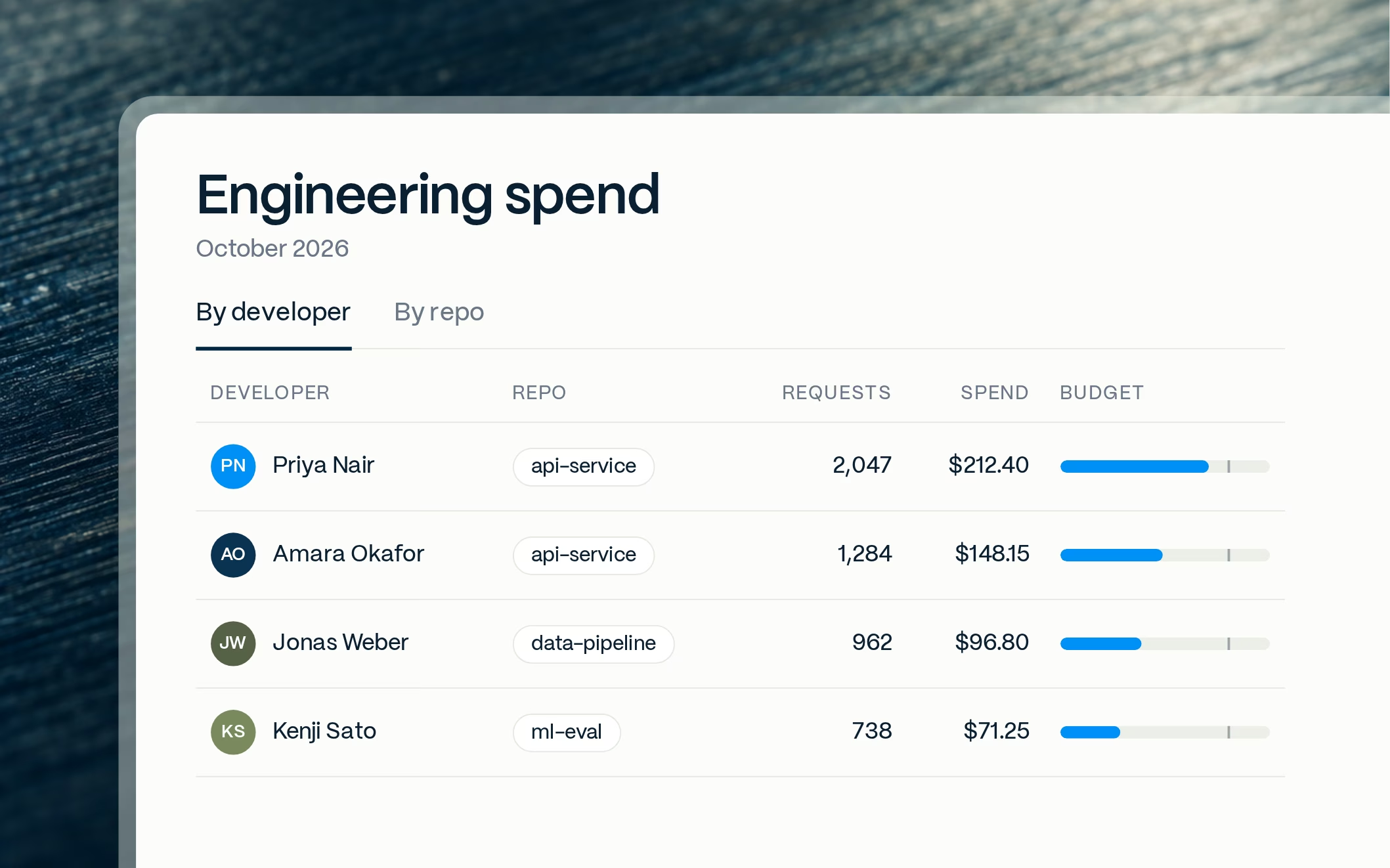
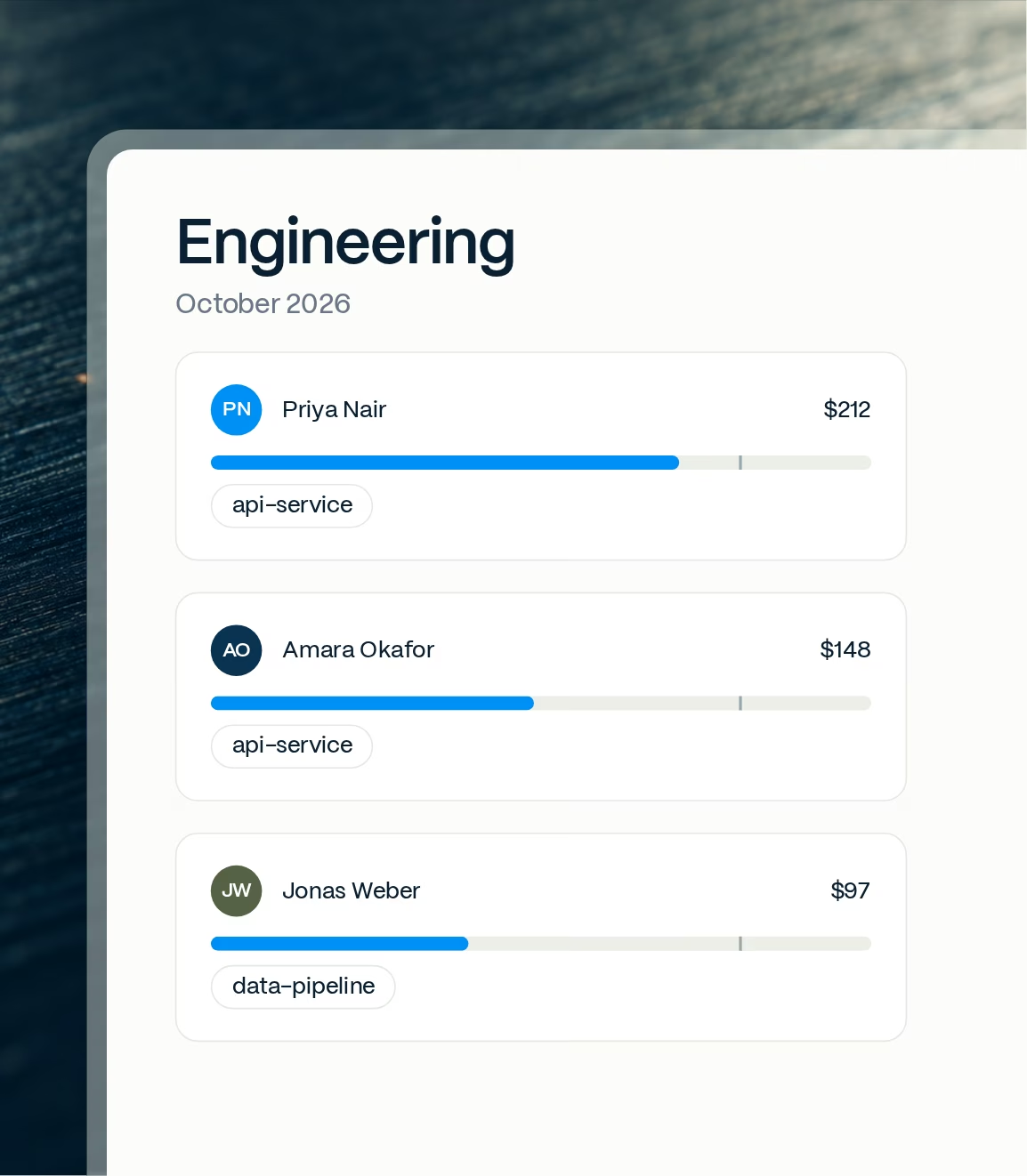 Illustrative example
There is a gap between what coding agents cost and what they need to cost
A proxy tuned to your repos closes it, with the same output


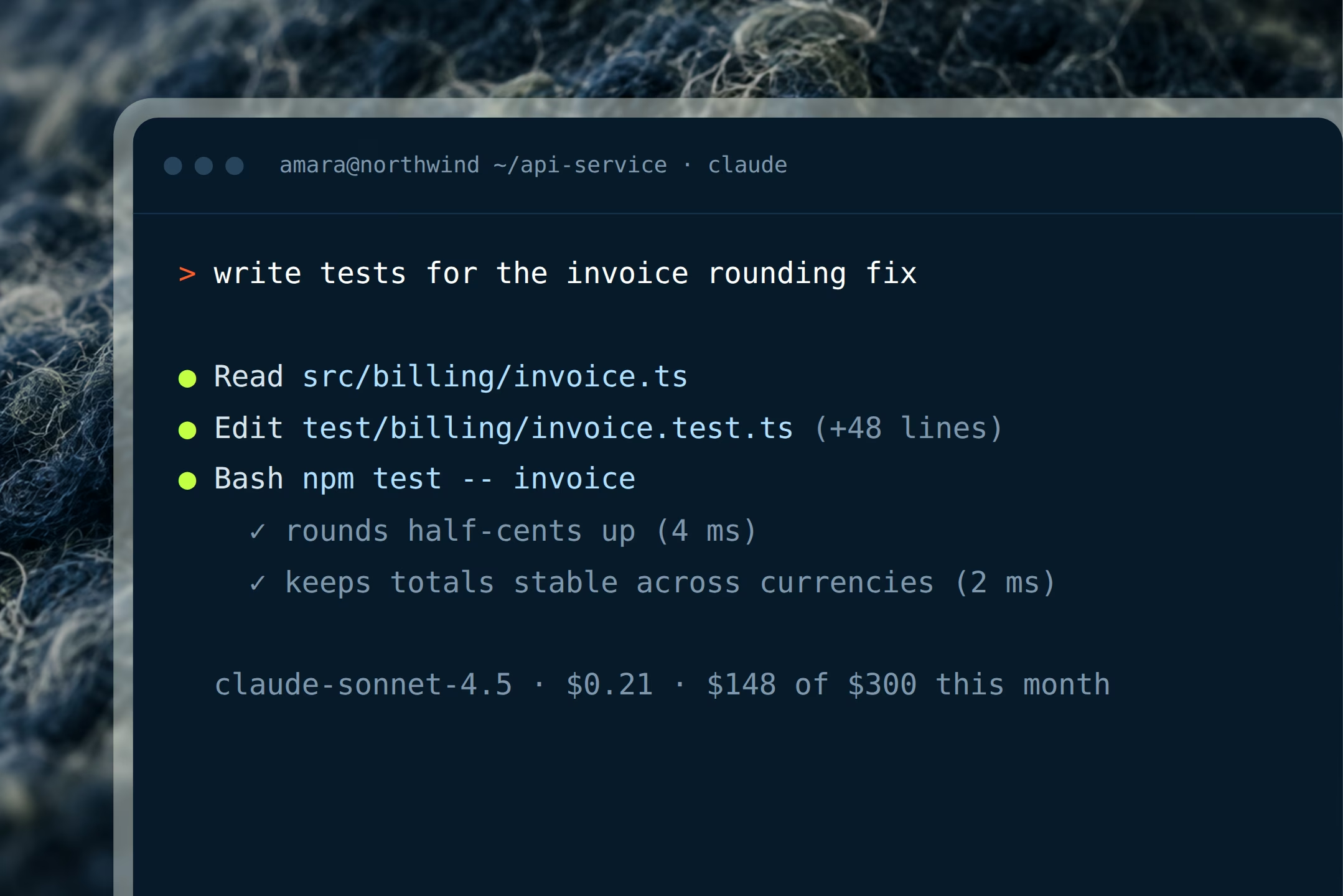 Illustrative example
Engineering orgs can keep Claude Code, Codex and Cursor exactly as they are
 Illustrative example
and still pay less for every request, with the cost visible per person, per agent and per repo.

That's exactly what Proxen is built to do.

 Illustrative example
See a 20-developer coding-agent bill worked through, step by step, on public prices



Ready to see what your coding agents should cost?
Frequently asked questions
Do my developers have to change the tools they use?
No. Claude Code, Codex, Cursor, Cline, Aider and plain SDK calls all keep working. Each developer changes one base URL to the Proxen address and pastes in their own key. Claude Code officially supports routing through an organization's gateway, and the other tools expose the same setting. Prompts, slash commands, extensions and editor integrations stay as they are. The only thing a developer notices is that nothing changed.
How does the proxy lower Claude Code cost without making answers worse?
Most Claude Code cost is context: the conversation, tool output and files sent with every turn. The proxy trims that to what the model needs, keeps the prompt cache warm so repeated context is billed at the cache rate, and sends easy steps to a cheaper model while hard steps keep the strongest one. Before any rule goes live we test it on your own repos and compare the answers with what your developers get today. You approve every rule, and the log shows which model answered each request.
How do you control Claude Code cost across a team?
Every key carries tags, such as a person, a team and a project. You set a monthly budget on any of those: a person, a repo, a client project, an agent or the whole org. Proxen meters every request underneath. At 80 percent of a budget the owner gets an alert. At 100 percent the key stops until you raise the cap or the month resets. Because each budget is separate, one project running hot never drains another. The console shows live spend against every budget so you can move allowance where the work is.
What happens when one developer or one agent uses far more than everyone else?
They hit their own cap, not the org's. That is the whole point. With a shared plan one heavy user locks everyone out until the limit resets, and an unattended agent keeps spending until someone notices the invoice. With a key per person and per agent, requests count only against that key's budget. You see who it is in the log, decide whether the work justifies a bigger allowance, and change the cap in the console. Nobody else is affected and nobody has to ask the channel who burnt the budget.
How do CI jobs and agents get cheaper pricing?
Give each pipeline, review bot or scheduled agent its own key. Work that can wait for results goes through the providers' batch APIs, which Anthropic and OpenAI price at half the normal rate on input and output. We move the right jobs over with you. Interactive keys for developers stay on the normal fast path. On top of that the proxy routes simple tasks to cheaper models and caches repeated context, which brings the cost per request down month after month.
Does Proxen see our source code?
Requests pass through the proxy, which is how it meters and routes them, but by default it does not keep them. Proxen logs who sent the request, which model answered, how many tokens it used and what it cost. Prompt and response bodies are not stored unless you switch that on for your own audit needs. Retention is a setting you choose, and the proxy can run in our cloud or in yours if you want the gateway and its logs inside your own environment. Requests still go out to the AI providers you enable.
Is Claude Code for teams the same as Claude Code enterprise through a gateway?
Close. Anthropic's own docs describe the supported route for organizations as an LLM gateway: the provider key stays server-side and developers hold gateway credentials instead. Proxen is that gateway, plus the tuning that makes each request cheaper. It runs on API accounts your company owns, so every token is licensed to you, with a budget and a log per developer.